
Marc Grens on Crypto ATM Fraud and Consumer Protection | Chaintrax Cyber
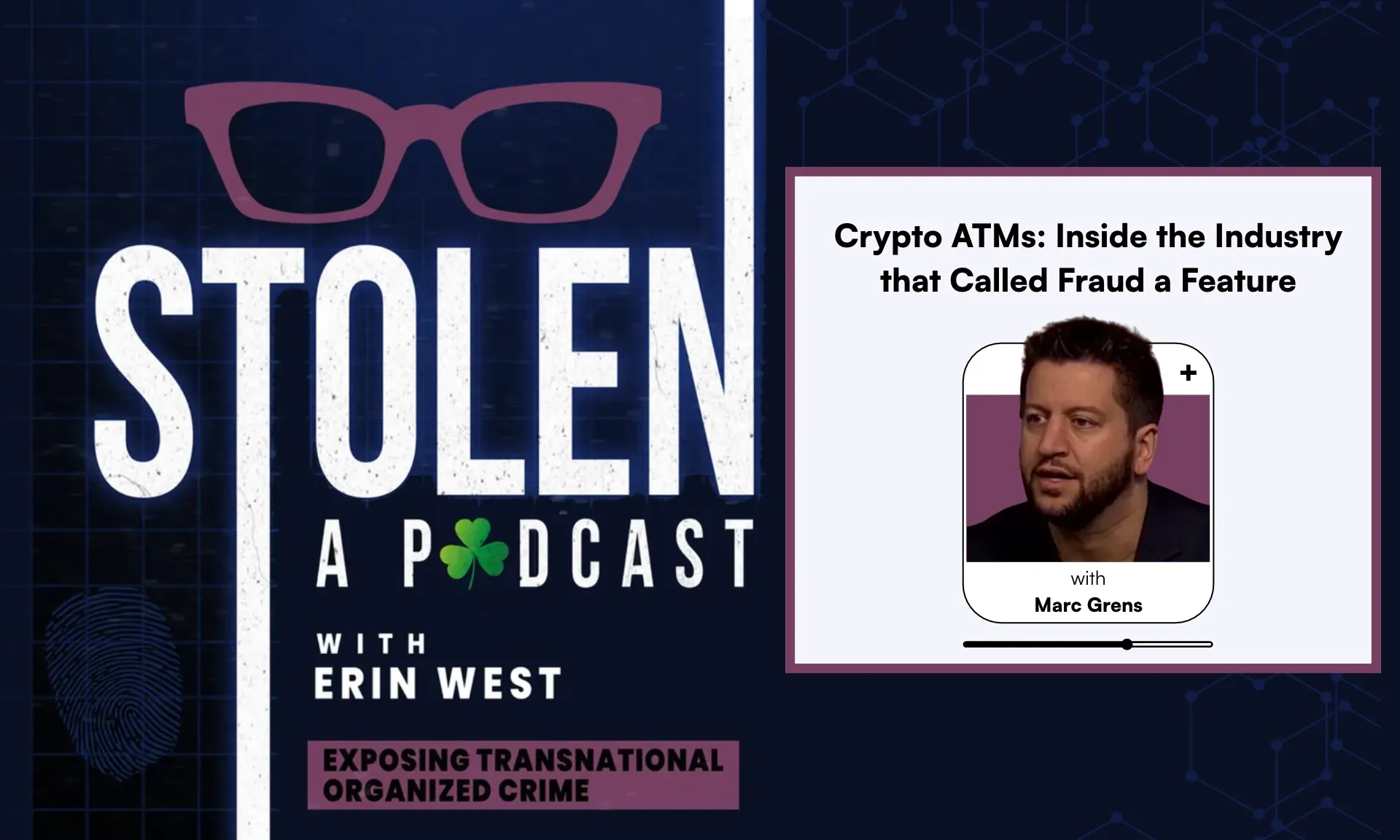
Chaintrax Cyber Co-Founder and President Marc Grens joins Erin West on the Stolen podcast to discuss the early crypto ATM industry, the warning signs of financial fraud, and why stronger compliance measures are essential to protecting consumers.
The cryptocurrency ATM industry grew rapidly by making digital assets accessible to everyday consumers. But as adoption increased, so did the opportunity for criminals to exploit the technology. What began as a convenient way to exchange cash for cryptocurrency increasingly became a payment channel used in financial scams, particularly those targeting older adults.
For Marc Grens, Co-Founder and President of Chaintrax Cyber, these concerns are rooted in firsthand experience.
In a recent episode of the Stolen podcast, hosted by Erin West of Operation Shamrock, Grens reflects on his experience co-founding and operating one of the country’s earliest cryptocurrency ATM businesses. The conversation examines an industry where rapid growth and substantial financial returns often compete with the need for stronger consumer protections.
The interview has since sparked discussion among professionals across the cryptocurrency, fintech, and financial services industries. Richard Sanders and Lukasz Lukaszewski were among those who shared their perspectives on LinkedIn, highlighting the broader implication of Grens’ experience and the importance of transparency, ethical decision-making, and consumer protection. Their reactions reinforce questions of corporate accountability, financial compliance, and the responsibility businesses have to protect consumers from fraud.
Recognizing the Warning Signs
At its peak, the cryptocurrency ATM business Grens co-founded operated approximately 1,400 machines across 35 states. That scale provided valuable insight into transaction activity, customer behavior, and emerging fraud patterns.
As the business expanded, its compliance team began identifying concerning activity among customers using the machines. According to Grens’ account, the company progressively lowered the transaction thresholds that triggered customer outreach, moving from $50,000 to $10,000.
The results were troubling. Even at lower transaction amounts, compliance reviews continued to identify individuals who were being manipulated by scammers.
These were not necessarily customers making informed decisions to invest in cryptocurrency. In many cases, they were individuals acting under the direction of criminals who had convinced them to withdraw savings, deposit cash, and transfer funds to cryptocurrency wallets controlled by the scammers.
The transactions themselves could appear legitimate. Customers were physically present, using their own money, and authorizing the transfers. The fraud was taking place outside the machine, often through phone conversations designed to create fear, urgency, or a false sense of authority.
That distinction presented a significant compliance challenge. Traditional transaction monitoring could identify unusual financial activity, but determining whether a customer was acting under coercion required additional scrutiny.
When Financial Incentives Conflict With Consumer Protection
One of the more striking aspects of Grens’ conversation with West concerns the economics of the cryptocurrency ATM business.
According to figures Grens discussed during the episode, a cryptocurrency ATM could cost approximately $6,000, while early cash-on-cash returns could reach 850%. Those economics created substantial incentives for operators to expand their networks and increase transaction volume.
But high transaction volume was not necessarily evidence of healthy customer demand.
Grens describes raising concerns about fraud at industry conferences, only to encounter resistance from others who viewed the financial opportunity differently.
The underlying issue was a conflict between commercial incentives and consumer protection. When operators earn revenue from completed transactions, stronger fraud controls can create friction, delay transactions, or prevent them entirely.
That friction, however, can be exactly what protects a customer from losing their savings.
The challenge is not unique to cryptocurrency ATMs. Financial institutions, payment processors, and other businesses facilitating the movement of funds must continually assess whether their controls are capable of identifying suspicious activity before money reaches criminal networks.
Effective compliance requires more than meeting minimum regulatory requirements. It requires understanding how criminals exploit legitimate financial infrastructure and being willing to intervene when transaction activity suggests that a customer may be at risk.
Why Crypto ATM Fraud Is Difficult to Stop
Cryptocurrency ATM scams frequently rely on social engineering rather than technical compromise.
Criminals may impersonate government officials, financial institutions, technical support representatives, or other trusted authorities. Victims are pressured to act quickly, often under the belief that their money is at risk or that they face serious consequences if they do not comply.
Once the victim deposits cash into a cryptocurrency ATM and sends the purchased cryptocurrency to a wallet controlled by the scammer, recovering the funds becomes significantly more complicated.
The speed and finality of blockchain transactions make early detection particularly important. Although cryptocurrency transactions can be traced, identifying the destination of stolen funds does not automatically guarantee recovery.
For operators and financial institutions, this creates a narrow window in which suspicious behavior can be identified and interrupted.
Transaction limits, enhanced customer verification, employee training, and direct outreach to customers can all play a role. However, these measures are most effective when supported by compliance teams that understand the methods criminals use to manipulate victims.
The objective is not simply to identify suspicious transactions after they occur, but to recognize the circumstances that may indicate fraud before the transaction is completed.
A Shift Toward Cybercrime Resolution
Grens’ experience in the cryptocurrency ATM industry also provides context for the work Chaintrax Cyber performs today.
Built on more than a decade of experience supporting cyber incident response, Chaintrax Cyber focuses on ransomware response, threat actor intelligence and negotiations, compliant ransomware payments, and cryptocurrency investigations.
While ransomware incidents and consumer cryptocurrency scams involve different circumstances, both demonstrate how criminals exploit financial systems and digital assets to move funds.
Addressing these threats requires an understanding of blockchain transactions, criminal behavior, financial compliance, and the operational challenges involved in investigating cyber-enabled crime.
Grens’ discussion with West reinforces an important lesson from his earlier experience: organizations cannot afford to treat fraud prevention as a secondary consideration once financial losses become apparent.
Controls must evolve alongside the threats they are designed to address. Just as importantly, organizations must be prepared to act on the warning signs their own data reveals, even when doing so creates operational or commercial challenges.
Industry Leaders Respond to the Conversation
The conversation between Marc Grens and Erin West has also drawn attention from professionals across the cryptocurrency, fintech, and financial compliance sectors. Reinforcing concerns about the relationship between incentives, regulatory responsibility, and consumer protection
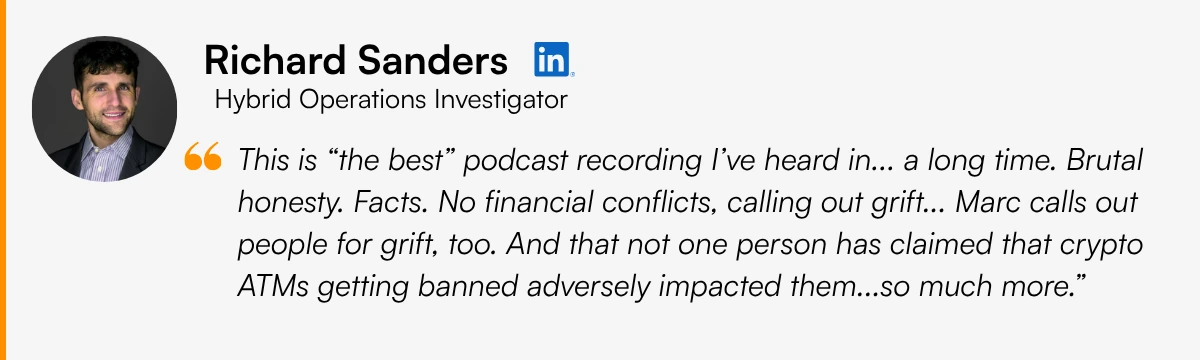
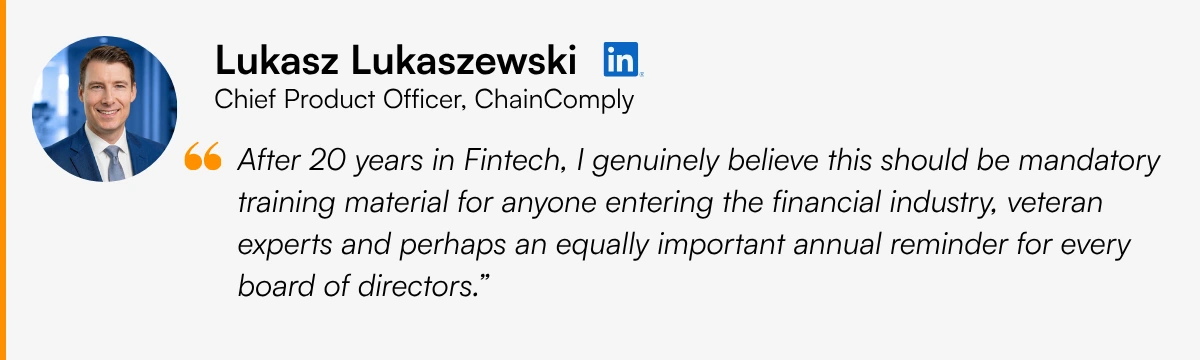
Both reactions underscore an issue that extends well beyond crypto ATMs. Financial institutions and payment providers face ongoing pressure to balance commercial growth with their responsibility to identify suspicious activity and protect from fraud. When financial incentives discourage stronger controls, the consequences can extend far beyond individual transactions.
The response to Marc’s interview reflects a growing willingness among industry professionals to examine these challenges openly and question whether existing safeguards are sufficient to protect consumers.
We thank Erin West and the Operation Shamrock team for providing a platform for this discussion, as well as Richard Sanders and Lukasz Lukaszewski for sharing their perspectives and helping bring greater attention to these issues.