
Beyond the Ransom: What Organizations Need to Know Before Making a Ransomware Payment
When an organization is hit by ransomware, one of the most consequential decisions it may face is whether to make a payment. But that decision involves far more than agreeing on a number and transferring cryptocurrency.
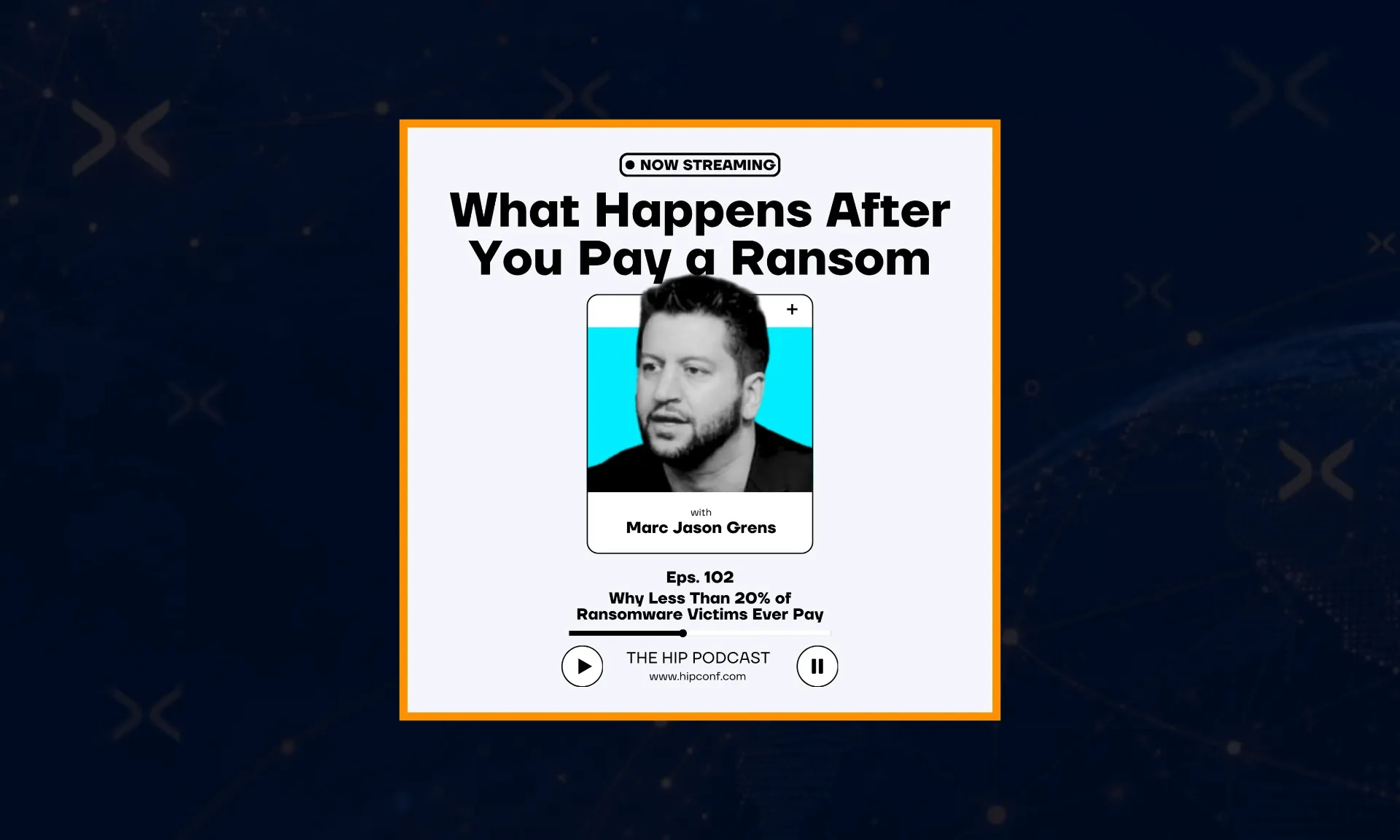
Chaintrax Cyber President, Marc Grens recently joined Sean Deuby and Jeff Wichman on the Hybrid Identity Protection Podcast to discuss what actually happens during ransomware negotiations, why many incidents never result in payment, and the compliance and investigative considerations that come into play when an organization does decide to pay.
Drawing on experience advising on more than 4,000 cyber incidents, Marc breaks down a process that often happens behind the scenes during ransomware response.
Most Ransomware Negotiations Don’t End in Payment
One of the key points Marc discusses is that engaging with a threat actor does not automatically mean an organization will ultimately pay.
According to Marc, fewer than 20% of ransomware cases in which victims communicate with a threat actor will ultimately result in a payment.
There are numerous factors behind that decision. Organizations may determine that they can restore operations without obtaining a decryptor, conclude that stolen data does not warrant payment, or decide that the risks associated with paying outweigh the potential benefits.
Negotiation can therefore serve a broader purpose than simply reducing a ransom demand. It can give incident response teams additional time and information to assess the situation, understand the threat actor’s position, and evaluate available options before deciding how to proceed.
Evaluating Threat Actor Behavior
This episode also examines one of the fundamental problems involved in ransomware negotiations: there is no conventional mechanism for enforcing a threat actor’s promises.
Attackers may claim that payment will result in a decryptor, deletion of stolen data, or an agreement not to target the victim again. Organizations must determine how much weight, if any, those claims should carry.
Marc discusses how historical threat actor intelligence can help inform that assessment. Previous incidents, observed behavior, negotiation history, and known instances of re-extortion can provide additional context when evaluating a threat actor’s claims.
That information does not eliminate uncertainty. It gives response teams more information to work with while making decisions under difficult circumstances.
Ransomware Payments Carry Compliance Considerations
If an organization ultimately decides to make a ransomware payment, another major consideration emerges: sanctions compliance.
The episode discusses why due diligence should occur before funds are transferred. Ransomware payments can create exposure under U.S. sanctions requirements when a transaction involves a sanctioned individual, organization, jurisdiction, or associated cryptocurrency address.
That makes sanctions screening and threat actor due diligence an important part of the payment process–not something to address after the transaction has already occurred.
Marc also discusses the risks associated with organizations attempting to acquire cryptocurrency and execute ransom payments themselves. Beyond the operational challenges, moving funds during an active incident, organizations must consider compliance requirements, documentation, insurance requirements, and the parties involved in the transaction.
The Payment Isn’t the End of the Incident
Another major theme of the conversation is what happens after cryptocurrency leaves the victim’s wallet.
Blockchain transactions create a financial trail that investigators can analyze. Chaintrax Cyber uses blockchain intelligence and forensic analysis to track funds as they move through wallets, services, exchanges, and other parts of the cryptocurrency ecosystem.
That analysis can help identify where funds move after a ransomware payment and support coordination with law enforcement when opportunities for potential seizure or recovery arise.
As the episode emphasizes, making a ransomware payment should not be viewed as the conclusion of the response process. It can instead mark the beginning of additional compliance, documentation, investigation, and recovery efforts.
Preparation Matters Before an Incident Happens
Many of the decisions discussed throughout the episode must be made while an organization is already dealing with operational disruption, legal considerations, insurance requirements, and significant time pressure.
Preparing for those decisions before an incident occurs can give organizations a clearer path forward.
Understanding who will handle threat actor communications, how sanctions due diligence will be conducted, how a payment could be executed if necessary, and what happens afterward can reduce the number of critical processes that need to be established in the middle of an active ransomware event.
At Chaintrax Cyber, our team supports organizations throughout the ransomware response process, including Threat Actor Intelligence & Negotiations, compliant Ransomware Payments, Dark Web Monitoring, and proactive incident response preparation.
Prepare Before the Decision Has to be Made
Ransomware incidents move quickly. The processes surrounding negotiations, compliance, payments, and post-payment investigation should not have to be built from scratch during an active incident.
Contact Chaintrax Cyber to learn how our team can support your organization before, during, and after a ransomware event.